Such a lot of world to see.

Latest

Miami is cold hearted, but I don’t hold it against her.

As much as this site is about photography, it’s often just as much about traveling. I consider myself fairly well travelled, experienced even, managing to stay (more or less) safe in 18 countries since taking a liking to photography. Much of that time, I was alone, just me and my camera.  But yours truly made something of a novice traveler’s mistake (at least it seems that way in hindsight) – and it has left me with a few less valuable possessions since returning from Florida. Namely, my camera.

Thankfully, nothing was taken that isn’t replaceable. I’m always grateful when I return home safe and sound. Really, that’s always the most important thing. With that said, it’s still a disheartening lesson to re-learn, the lesson we all think we know: protect your valuables.

You can steal my camera, but you can’t steal my eye for photography, or my sense of adventure. You might however be able to teach me a valuable lesson or two, jerk.

Here are some pictures taken from a lowly camera phone, a joke of a substitute for an SLR in the interim.  

Daytona Beach, not the site of the buglar, and quite an amazing Beach.

An abandoned farmhouse, somewhere in southern Manitoba.

A field with big sky, Manitoba.

A cleanly organized log pile, Manitoba prairies.

Shooting sunsets

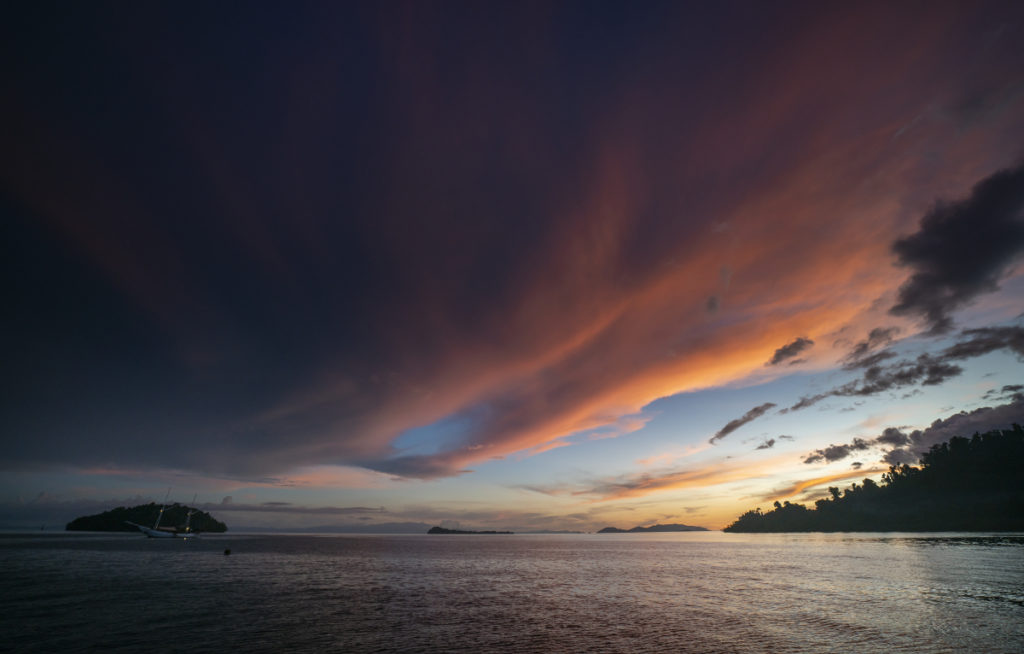
An important rule of photography has always been to pay close attention to your lighting. The best time of day to maximize the color and the vividness in captures is often in the golden hour before sunset (or just after sunrise for the earlybirds). With the sun at your back, you can produce saturated and detailed exposures that normally wouldn’t ‘pop’ out during noon hour’s harsh lighting. Opposingly, shooting flat into the sun will produce dramatic, contrasty images that usually have dark silhouettes with little detail, but surrounded by vivid oranges and blues. Long sunsets have returned to the north, happy shooting.

Neo-Tokyo, in pictures.

I wrote a little bit about Tokyo while I was on location a few months ago here. Since then, after the reminiscing that takes place while going over all these captures, I’ve come to some conclusions about Tokyo:  it’s absolutely incredible urban phenomena that exist nowhere else on earth. It’s denser and sprawls further than any place I’ve seen, yet it somehow maintains and aura of organization that you won’t find in any other metropolis.  The city is put together so tightly you won’t find an inch of unused space, yet the people of Tokyo have still managed to preserve their patience and politeness at any cost.

It’s a place that can easily leave you at a loss for words, because it’s so difficult to describe the scope, the vibrancy, and the bewilderment you experience in Tokyo. Here’s my gallery of 74 pictures, from Tokyo. Click.

Ko Sumui & the Gulf of Thailand

In a part of the world famous for  tropical islands, sandy beaches and coconut palm trees, Samui is one such island where I ended up. It’s not Thailand’s most famous island, or most visited, but Koh Sumui one could argue is not as spoiled as those destinations, either. That’s not to say it isn’t a tourist hotspot; it’s transformed from a fishing community to a tourist based economy for certain. However you’re still able to find traditional fishing villages and empty beaches along with your usual “catered to foreigners” developments. With dozens of other islands nearby, it turned out to be a great place to start exploring the islands of southern Thailand.

Here is the Gallery.

Inside a Tropical Rainforest. Khao Sok.

In a country once covered by lush rainforest, Khao Sok is one of the few places in Thailand where you can visit an actual rainforest. Sure, the rest of Thailand is still lush and green, but in truth most of the indigenous rainforest has been replaced with farmlands, rubber and palm oil plantations. Though Southeast Asia has the oldest rainforests in the world, these are also the rainforests the most at risk for destruction – logging, hunting, overpopulation, political instability – all factors in an ongoing biological catastrophe.

 
Khao Sok is a pocket of mostly untouched rainforest in southern Thailand, where gibbons, hornbills, and even tigers still exist in their natural habitat. Being able to live a few days in the rainforest is an experience of a lifetime. The gibbon calls at the crack of dawn, the tropical downpours…or sometimes just staring up into the dense canopy above, these are some of the things that make Khao Sok unforgettable. Click here for the gallery.

Indochina’s capital: A Bangkok gallery.

I’ve mentioned before that Bangkok might be one of the least inviting major cities you can visit, and I stand by that statement. The relentless heat and pollution in this concrete jungle won’t initially please the tourists who come from all over the world to visit Thailand. Most will leave BKK in a hurry for the beautiful tropical paradise that is southern Thailand.

But if you’ve come all the way across the world, leaving without experiencing Bangkok would be a mistake. The temples are among the most exquisite you’ll find anywhere. The shopping is ridiculous enough that even shopping nonfans will enjoy it.  Bangkok is just plain interesting culturally – halfway between India and China both in essence and on the map. Lively and full of character; sweaty, congested and tropical; this is Bangkok, city of life.

Click here to see the gallery. Use the info button (i) to get captions. Peace.


Seoul Searching

All roads in South Korea lead to Seoul. It’s a huge city in a relatively small country – about half of the entire country’s 50 million inhabitants live in Seoul.  It’s a metropolis defined by a rapid economic growth spurt between the 1960s-1990s, making it one of the early Asian boomtowns outside of Japan. On the international level, it’s known as a technology player on par with the likes of Tokyo and Silicon Valley.

You’ll come to realize some strange things about Seoul. Its cityscape is quite… utilitarian. You’ll see identical concrete high-rises rinsed and repeated hundreds of times, and it makes you wonder if there might only be one or two architects responsible for this entire, gigantic, city. Even the historical Korean architecture that you’ll find at temples doesn’t have the attention to detail that you’ll find in their fellow Asian counterparts. It’s understated, and simple, and repetitive. If it sounds a bit drab, it can be, but that doesn’t mean that you can’t find gobs of excitement in Seoul, if you know where to find it. Head up the right hill, or down that perfect alleyway, you’ll find it.  In this gallery, I did my best to capture the essence of Seoul.

Here is the Gallery.

In other tidbits, my Gwangju gallery was picked up by  Photo Dialogue, would you can find by clicking that link. A Bangkok gallery is up next, otherwise, enjoy the holidays. Peace.


Gwangju: A gallery from a thriving South Korean city that isn’t Seoul.

I’m not sure how to introduce Gwangju, so I’ll say this: Gwangju isn’t a world renowned city, nor is it a usual destination for travelers. If you’re not a foreigner teaching English, or visiting one, you’ll likely never end up in here. I couldn’t find any demographic statistics on Gwangju, but like the rest of Korea, it’s very ethnically homogenous (well over 99% of the population is ethnically Korean). Talk about visible minorities – us foreigners stand out like a sore thumb.

Gwangju is South Korea’s 6th largest city near the southwest edge of the Korean peninsula. It’s surprisingly vibrant thanks to a high population density and intelligent urban planning. It’s situated among gorgeous forested mountains; Korea is a country of mountains after all. Compared with Seoul, it’s a fair bit less crowded, the air is cleaner, and the cuisine is reportedly better (and it was, in my experience).  

I spent a few days taking in the great food and variably good soju. Coming from China a day before, Gwangju felt quaint and welcoming. With that said, the pedestrian streets of downtown Gwangju can be just as active as any Asian metropolis. So here is a gallery, off the beaten path in South Korea. Peace!
A Shanghai Gallery

If you don’t like skyscrapers and endless city lights, look away.

Shanghai seems like the vision we had of the post modern future back in the 80s. I couldn’t help but think of Bladerunner while walking around Shanghai at night. At street level Shanghai can be dark and grimy, but above you the colors are neon electric. It can feel like the most modern city in the world, or like you’re in going back in time to Shanghai’s colonial era.

Shanghai is really something special. It might just be the most exciting city in the world right now; it’s the head of China’s new world empire, growing faster than Manhattan in its golden era and stretching further than the eye can see. It’s a city saturated with urban chaos, where you can find cluttered street markets of old, and international finance centers of new. Walk along the Bund, and you’ll see the architectural remnants of when Shanghai was a booming western trade colony within China. Across the river, Pudong, just 20 years ago was undeveloped land. And now, It has one of the world’s most impressive skylines.

At street level, you get the sense that everything is moving. The pedestrians compete with the scooters and the sales carts for control of the sidewalks. The streets are a dangerous endeavor for anybody looking to drive.  Above that, with some elevation, you can watch Shanghai go on for miles and miles. It’s an army of high-rises and neon lights – straight out of a 80s sci-fi.  It’s hardly inviting, but get to know Shanghai, and you might not want to leave.

Here is the gallery